

Our Answer
Discussion was based on the overall impression that he currently was showing no response and deteriorating so it was felt necessary to proceed to whole lung lavage despite its risks.
In the meantime he had to be stabilised. There was careful co-ordination of the whole lung lavage to organise appropriate PICU and anaesthesiology support.
The left lung was lavaged first. Under general anesthesia, the left main stem bronchus was intubated with a cuffed 3.5 endotracheal tube, with a cuff sitting just above the carina. A 3.0 cuffed endotracheal tube was then passed into the trachea. Placement of the tubes was checked both clinically, and visually with a 2.2mm fiber-optic scope. Connector tubing for the double lumen endotracheal tube was used to connect the two endotracheal tubes to a single ventilator. Isolation of each lung was checked by alternately occluding the right and left endotracheal tube. At the beginning of the saline installation, a visual check was done with a 2.2 fiber-optic scope to ensure that no fluid was reaching the right lung. Normal saline was then instilled down the left endotracheal tube using a 60 cc Toomey syringe. Installations were done with 120 cc aliquots. Following each aliquot, the fluid was drained using gravity and light syringe suction. The initial fluid was foamy and creamy in colour. Over subsequent instillations, there was gradual clearing of the fluid. In total 2130 cc were instilled and a total of 2031 cc were recovered. The procedure was well tolerated.
Soon thereafter, two days on, the right lung was lavaged using a similar procedure.
The BAL was sent off to pathology and immunohistochemistry.
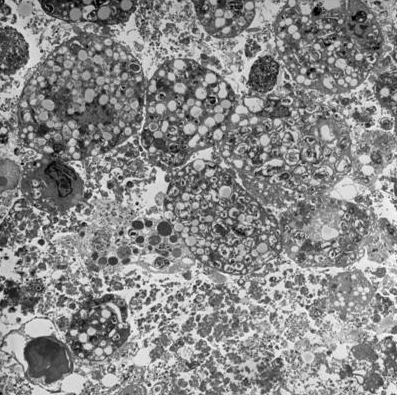 Figure 6a |
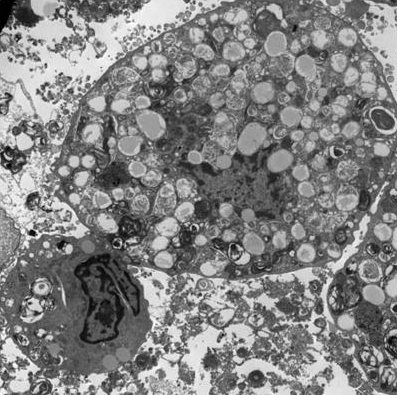 Figure 6b |
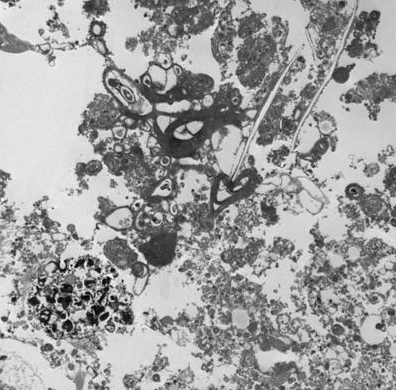 Figure 6c |
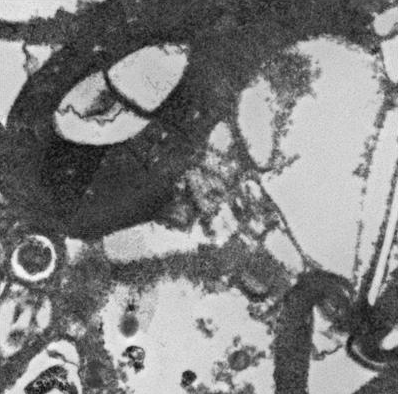 Figure 6d |
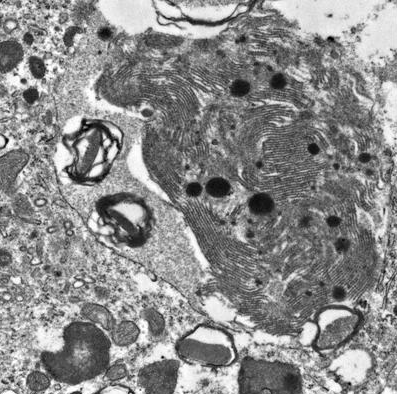 Figure 6e |
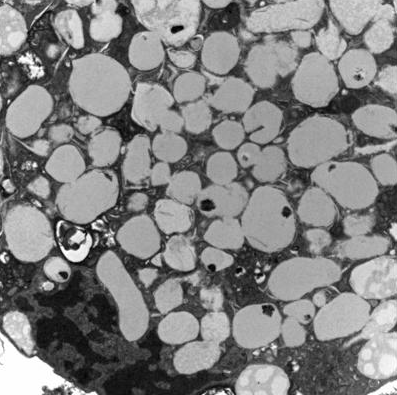 Figure 6f |
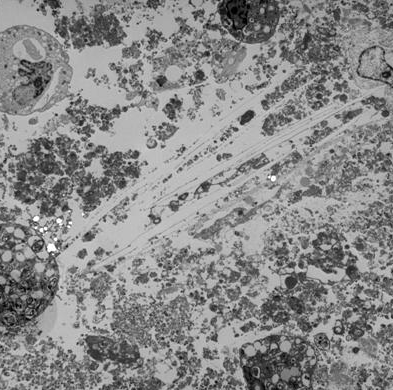 Figure 6g |
||
What do the electron microscopic images show?
 Next page / / References