

REFERENCES
Garty BZ. Chronic Pseudomonas colonization of the skin, ear and eyes in a child with type I pseudohypoaldosteronism. Acta Paediatr. 1999 Apr;88(4):472-3.
Hanukoglu A, Bistritzer T, Rakover Y, Mandelberg A. Pseudohypoaldosteronism with increased sweat and saliva electrolyte values and frequent lower respiratory tract infections mimicking cystic fibrosis. J Pediatr. 1994 Nov;125(5 Pt 1):752-5.
Marthinsen L, Kornfalt R, Aili M, Andersson D, Westgren U, Schaedel C. Recurrent Pseudomonas bronchopneumonia and other symptoms as in cystic fibrosis in a child with type I pseudohypoaldosteronism. Acta Paediatr. 1998 Apr;87(4):472-4.
MacLaughlin EF, Pseudohypoaldosteronism and Sodium Transport. Pediatr Pulmonol 1996; Suppl 13:181.
Prince LS, Launspach JL, Geller DS, Lifton RP, Pratt JH, Zabner J, Welsh MJ. Absence of amiloride-sensitive sodium absorption in the airway of an infant with pseudohypoaldosteronism. J Pediatr. 1999 Dec;135(6):786-9.
Schaedel C, Marthinsen L, Kristoffersson AC, Kornfalt R, Nilsson KO, Orlenius B, Holmberg L. Lung symptoms in pseudohypoaldosteronism type 1 are associated with deficiency of the alpha-subunit of the epithelial sodium channel. J Pediatr. 1999 Dec;135(6):739-45.
Image
Image
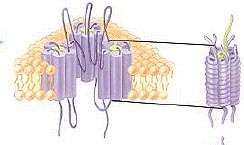
1. Epithelial Sodium Channel Source: Cellular and Molecular Building
Blocks II, Dr. Paul Patton.
Locator: http://www.soma.npa.uiuc.edu/courses/ bio303/Ch2b.html
THANK YOU FOR JOINING US FOR THE CROSS-CANADA PAEDIATRIC RESPIRATORY ROUNDS. HOPE TO SEE YOU NEXT TIME.
Thank you to AstraZeneca for their support of this program and website.
 BACK TO HOME 1 2
3 4 5
6
BACK TO HOME 1 2
3 4 5
6